
Published Nov 2026
When most people think of expenses related to dying, their minds naturally go to funeral expenses. And funerals are, indeed, pricey. According to Empathy’s 2024 Cost of Dying report, an average funeral costs over $5,600 (1). That’s a significant expense in a country where more than half of US adults can’t cover a $1K emergency expense from savings (2).
But it doesn’t end there. In fact, the cost of dying in the US can be much higher, with expenses related to settling a loved one’s affairs rolling in for well over a year after someone passes. Here are a few that may come as a surprise:
1. Court, legal, and administrative fees
These line items will vary widely by state, attorney, the specifics of the estate, and even family dynamics. But in some cases, they can be significant. A client of mine, a surviving spouse with a probate estate under $100K, was quoted $10K - $20K in attorney fees. (That estimate seems exorbitant—even predatory—to be honest, but apparently it was delivered with straight face by a reputable law firm.)
On top of that, her probate costs were over $3K, because in Connecticut, the court charges a percentage of the gross estate. The fee is based on the value of all probate and non-probate assets, regardless of the estate’s liabilities. (Whaaaaat?!)
But wait, there’s more! Probate bonds, death certificates, executor compensation, legal notice/publication fees, appraisal fees, accountant fees, and other estate administration expenses may come into play as well, and they can land in the hundreds or even thousands of dollars.

2. Maintenance costs for the deceased’s property during administration
Heirs often expect that property will pass to them pretty quickly after someone dies. In reality, estate administration can take many months, and sometimes much longer.
During that time, the deceased person’s property still has to be maintained. A vacant home may continue generating mortgage payments, insurance, utilities, property taxes, lawn care, snow removal, security, and repair costs.
And the house may be only part of it. Vehicles may need insurance and storage, boats may have marina or winterization costs, pets and livestock still need care, and belongings may need to sit in paid storage until the estate is ready to distribute, sell, or donate them.
(Note that these are typically expenses of the estate, not personal obligations of the surviving family or next of kin.)
In other words: ownership may be in limbo, but the bills are not.
3. Loans
And how are those bills getting paid, if the deceased’s funds are tied up in estate administration, and most Americans lack the financial safety net to use savings as a cash advance?
For some executors, it’s necessary to take on debt.
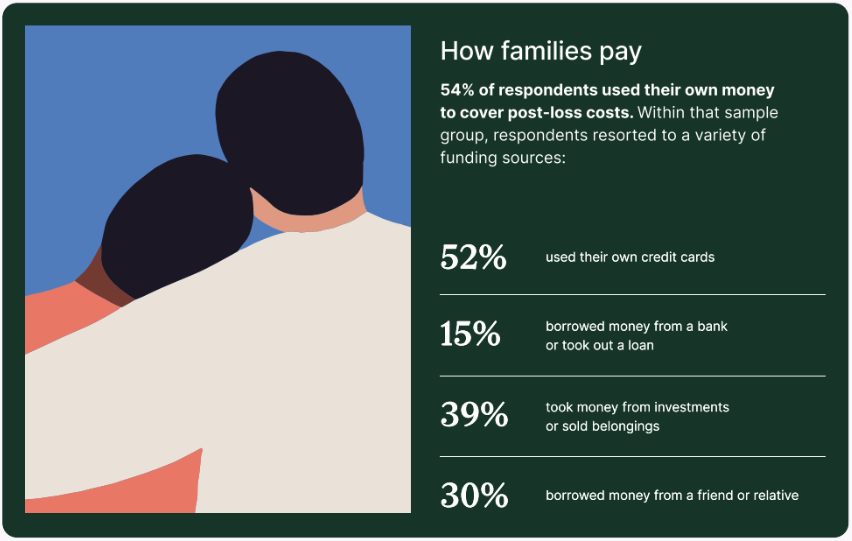
This may take the form of credit cards, a bank loan, a family loan, or selling off investments or belongings, most of which will incur interest.
In Empathy’s 2025 Grief Tax report (3), survey respondents reported using all these methods to cover post-loss costs.
4. Taxes
Most estates will never owe federal estate tax: in 2026, the federal exemption is $15 million. But some states set the bar much lower for state estate taxes. In Massachusetts, for example, the estate-tax exemption is just $2 million, which means estate tax can come into play if the deceased owned a modest Boston-area home and a retirement account.
And estate tax isn’t the only possible tax bill. Depending on what the deceased owned and how assets are transferred, an estate or its beneficiaries may also encounter income, capital-gains, or inheritance-tax issues.
Conclusion
None of this is meant to suggest that every estate will rack up all of these expenses. Many won’t!
But the cost of dying is bigger than the funeral bill. It can include legal, administrative, maintenance, financing, and tax expenses before the estate is finally settled.
So when planning for what happens after you are gone, think beyond the funeral. The more organized your affairs are, the easier it is for the people you leave behind to understand what they’re dealing with, make good decisions, and avoid unnecessary delays and costs.
For informational purposes only; not legal or financial advice.
Stay updated
If you’d like to receive updates on getting your affairs in order, navigating grief, and estate administration in your inbox, you can sign up for the Undermountain Partners newsletter here: